When Headway was founded, we were a few people in a room with an ambitious idea: to build a new mental healthcare system everyone could access. We had no permission structure, no roadmap process, and no one to wait on. If you saw a problem, it was yours to solve.
Today we’re a team of more than a thousand people, supporting 85,000+ mental health care providers and millions of patients. Even as we’ve scaled, we’ve held on to the way we worked in that first room: the agency, the urgency, the belief that the person closest to a problem is the one who should go fix it. While most companies quietly trade that way of working for process as they grow, I never wanted us to fully make that trade. I want Headway to be the place where people do the best work of their careers and make the most impact possible on patients and providers.
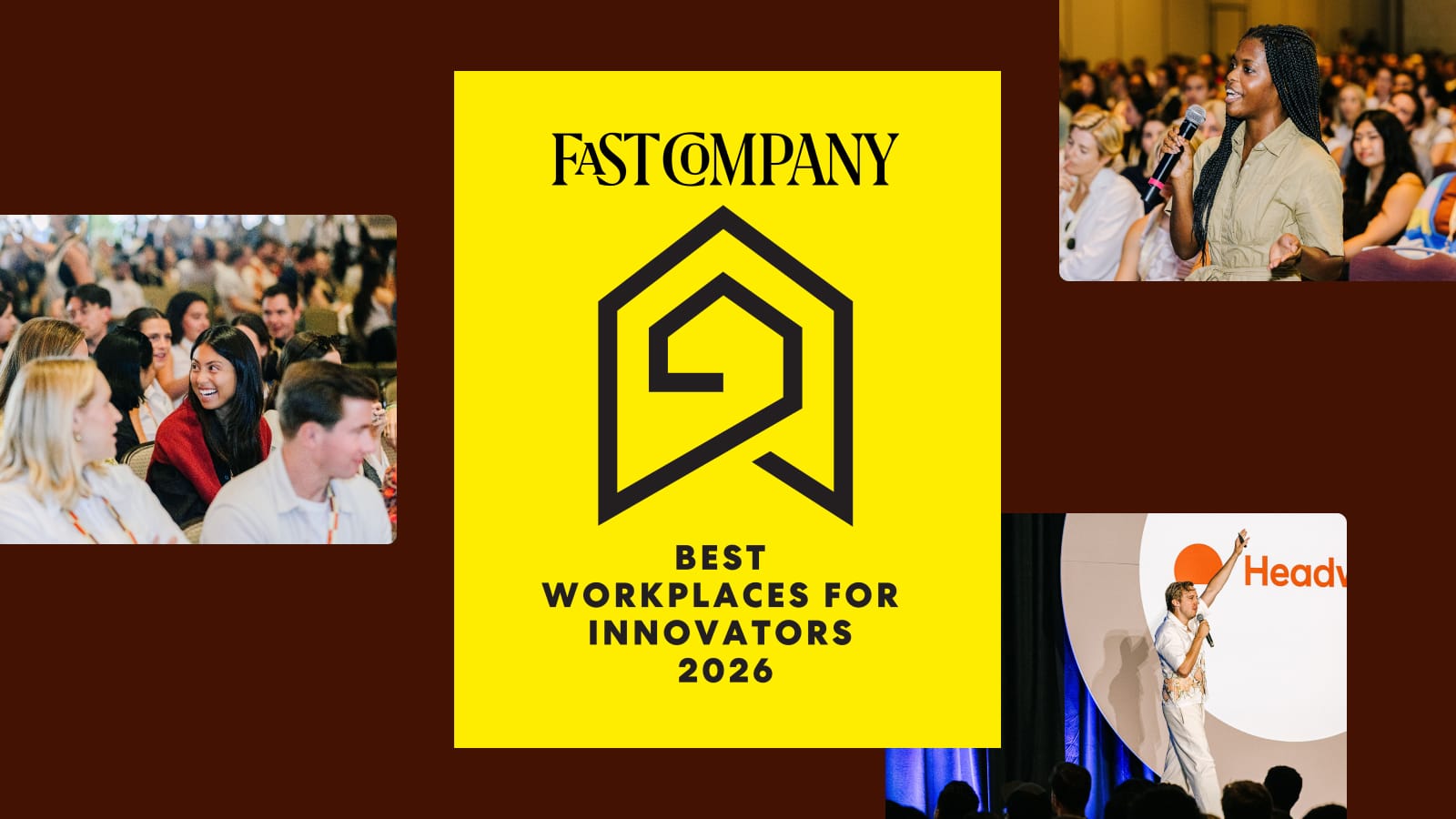
So I’m proud to share that Fast Company has named Headway one of its Best Workplaces for Innovators. What makes it meaningful to me is what it measures. Rather than a product award or a funding milestone, it looks at how a company operates: whether ideas can come from anywhere, and whether the good ones make it all the way into the hands of customers.
Here’s what that looks like in practice at Headway.
We hire the best people
We look for people who show up with ideas of their own and expect to be able to act on them. Entrepreneurship has to live at every level for that to mean anything: the associate on the phone with a provider, the designer, the analyst, anyone close enough to a problem to see it before the rest of us do.
That’s what our Olympic performance standard is for. Every person here was hired for Olympic-level expertise in their craft, and holding that bar is an active job for our managers rather than a line in an offer letter.
We’ve held that standard through a stretch of fast hiring, including at the top. When we bring on leaders like Arnaud Ferreri, our CTO, we get people who come here to learn from the best, and the bar rises again for everyone who joins after them.
We set ambitious goals, and we drop things to reach them
Ambition is easy to state and expensive to honor, because a real goal requires giving something up. We are willing to do that fast, including at the top.
Last year I set myself a personal goal of spending real, hands-on time with AI. Not long after, Arnaud and I had a single conversation about what building in AI-native ways would take. He came out of it and dropped roughly a third of his role. He had decided this was bigger and more urgent than the rest of his scope, and he wanted to get incredibly close to the work.
What came out of that is Eddy, our internal AI platform, which is built on Headway’s own data, codebase and operating context, so any employee can investigate a product issue, answer a hard data question or explore our code without waiting in a queue. Half the company is now an hourly average user, and not just engineers: customer experience, sales, operations, design and recruiting.
None of that was on a roadmap twelve months ago. It exists because two people were willing to put down work they were already accountable for. We have a name for this: Better, Faster, Fewer, the vital few over the worthwhile many. Deciding what to stop doing, and who to disappoint by stopping, is the hardest part of the job. It’s also the only way anything genuinely new gets built by a company that already has a business to run.
We push each other to do the best work of our careers
Setting the goal is the beginning. The harder part is the intensity you sustain against it. We’re direct with one another about that.
When Arnaud made the shift to focusing on AI, he moved to daily syncs with his team to drive the pace. A year ago our engineers were landing 15 pull requests a month, and today the number is 36.
What we want that speed for is work that reaches providers, and the best ideas about what to build come from the people closest to them. Often that’s our operations and customer experience teams, who spend all day with providers and patients and know exactly where we still fall short.
An example of this coming to life is a product improving clinical documentation. Progress notes (the write-ups therapists complete after every session) can take nearly as long as the session itself, and they’re some of the biggest contributors to clinician burnout. A group of our employees who had heard that frustration from providers firsthand wanted to fix it, and no one assigned them the project.
In three days, they built a working prototype inside our EHR that drafts a structured clinical note for the therapist to review, edit and finalize. We put dedicated engineering behind it after the demo, and it eventually reached providers, who have submitted more than 6 million AI-assisted notes so far.
We’re wildly transparent with context and motivation
People can only move fast on their own judgment if they have the same context I do. So we give it to them. Every quarter we debrief our board meeting at All Hands, including the material itself and the questions we get. Twice a quarter we go through where we stand against our goals. Roughly twice a year I give a keynote on company strategy and vision, and on the reasoning for why one thing matters more than another right now.
That extends to me personally. I share my 360 review with the whole company, unedited, including the feedback about where I am getting in my own team’s way. I share highlights from my therapy too. We are asking this country to treat mental healthcare as an ordinary part of life, and I am not willing to make an exception of myself.
Context is what makes it possible for people to make the right call without me in the room, and it’s what turns a thousand people with good judgment into a thousand people making good decisions. Going first on the uncomfortable parts is what makes it cheaper for everyone else to do the same.
Why this matters
None of this is culture for culture’s sake. Mental health care in this country is still rationed by luck and by money, and every week we shave off someone’s search for the right therapist is a week they spend getting care instead of waiting for it.
That’s also why our growth matters. Headway has gone from an idea to a platform used by 85,000+ clinicians serving millions of patients, roughly doubling year over year. That number is the clearest measure I have of how many more people can reach care, and it funds everything we build next.
To every employee who has built something here that no one asked them to build: thank you. This recognition is yours.
And if this is the kind of place you’ve been looking for, consider joining us. We’re hiring across engineering, product, design, data, and more. You can find our open roles at headway.co/careers.