When we expanded our free, insurance-native electronic health record system (EHR) last September, we made a promise: keep building until the everyday work of running a practice gets easier so clinicians can spend less time on admin and more time with their patients. Ten months later, we want to share what that promise turned into.
Behind the promise is a simple belief: clinicians should shape the tools they use every day. When they do, everyone feels it. The administrative weight lifts, and a clinician who isn’t preoccupied with paperwork can be more present with the patient in front of them, which can strengthen the therapeutic relationship.
As a clinician myself, I can tell you none of this got built in a vacuum. Clinicians were with us the whole way, telling us what to fix and what to build next.
Picking up where we left off
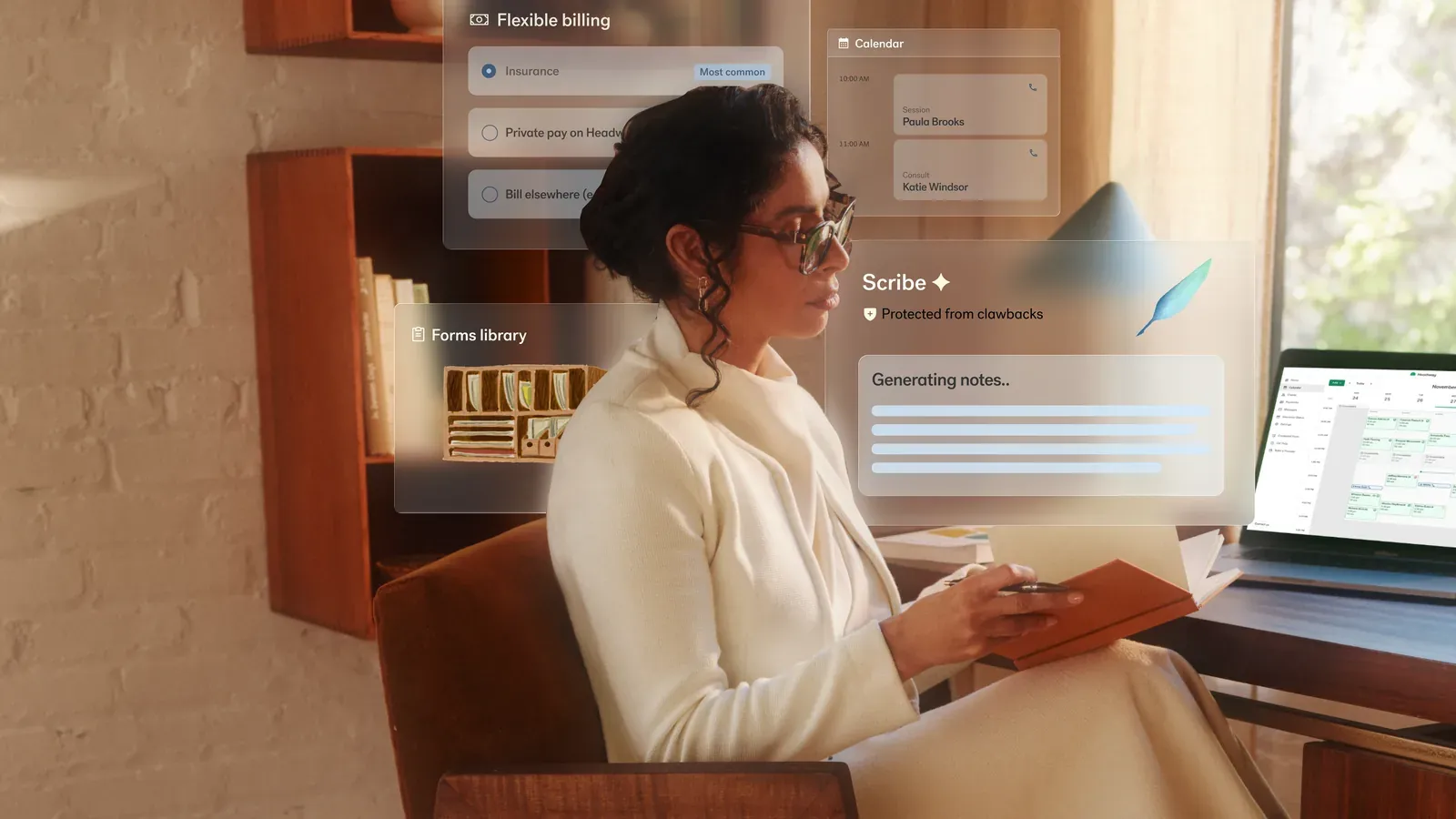
Our September EHR expansion brought core practice tools into one connected, insurance-native system: AI-assisted progress notes, integrated telehealth, a scheduling calendar, a centralized forms library, and simpler billing. Clinicians told us it changed how their days felt. They also told us where the rough edges still were.
So we spent the following months on the unglamorous work that matters just as much as new features: making the tools clinicians rely on faster and more dependable. We streamlined signing a note and billing the visit into one step, so finished work stops getting stuck between them. And we invested across the platform in speed and stability, with far less downtime quarter over quarter.
We then added new features and functionality that clinicians asked us for, such as Scribe.
Meet Scribe
Documentation is one of the pain points clinicians bring to us most often. It’s why so many end up finishing notes at night, on weekends, long after their last session of the day.
Scribe, our AI note assistant, is built to give that time back. It’s an evolution of the AI-assisted notes we introduced last year, not a new product bolted on. Clinicians can still draft from a short written summary, the way many already do. And now, during a one-on-one Headway Telehealth session and with client consent, Scribe can transcribe the conversation in the background and draft the note when the session ends. Either way, the clinician decides how to work, and stays in charge of the result.
Every drafted note must be reviewed, edited as needed, and signed by the clinician before it becomes part of the record. Drafts arrive pre-structured in Headway’s templates, built to align with clinical quality and payer standards, and they retain the clawback protection those templates already provide. Usually the draft is ready in a couple of minutes or less.
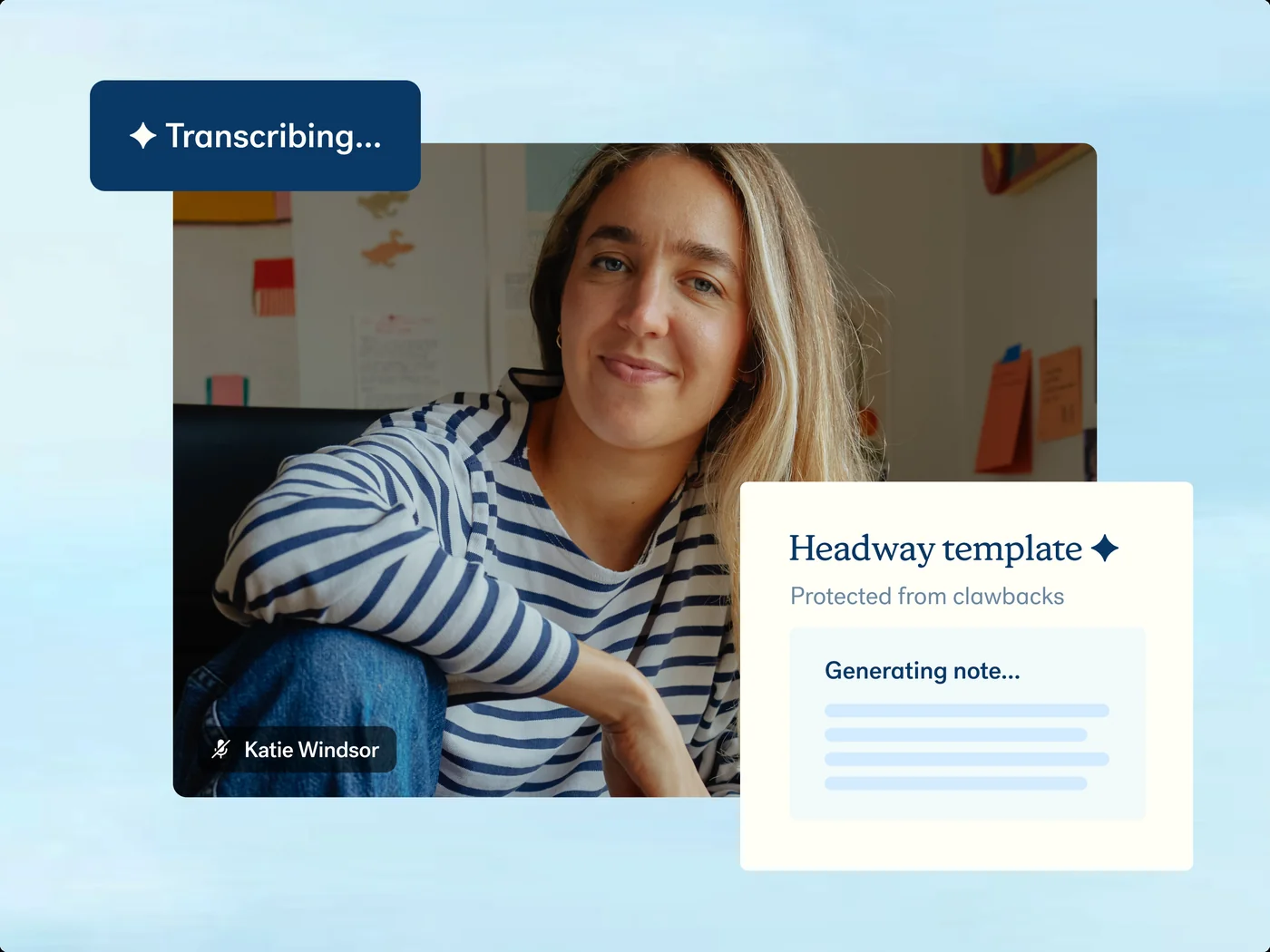
We built Scribe in-house thoughtfully, so it would meet our own clinical bar before it ever reached a clinician. That meant rounds of clinical review to confirm the draft stays grounded in what was actually said in the session, and a deliberate choice by our clinical team to keep the most nuanced judgments, diagnosis and risk assessment, with the clinician rather than the model. Scribe drafts; it does not decide. Clinicians tell us they rarely need to change much, and we still expect them to read and own every word.
Privacy was a first principle, not a patch. Scribe is HIPAA- and SOC 2-compliant and end-to-end encrypted. No audio or video is ever recorded. Patients must consent before transcription can begin, and can revoke that consent at any time. Like the rest of our EHR, Scribe is free, optional, and available now to talk therapists on Headway.
What clinicians are saying
“I would tell all my peers to join it and to use it, because you have no idea how many people struggle with notes. There’s no conflation, nothing. It knows exactly what the client said, what the therapist said. I barely had to do any editing at all.” — Leah Drizin, LMHC
“If you all turned it off, I would be so mad, because then I gotta go back to doing notes the regular way. If it was taking me 30 minutes to do a note, now it’s really only taking 10. It does give you a quality of life back.” — Dwonna D. Lenoir, LPCC
“It definitely helps with the mental load. It does such a good job of capturing the important things I’d want in the note that I don’t have to worry about being up later to draft it myself. It really does help make therapy life a little bit easier.” — Andrea Motley, LMSW
By the numbers
On notes drafted from a Headway Telehealth session, clinicians cut their documentation time in half.
Notes written with Headway’s compliant templates and AI assistance are three times more likely to pass an audit.
Clinicians on Headway have submitted more than 6 million AI-assisted notes since September 2025.
9 out of 10 clinicians who try Scribe keep using it.
The bigger picture
Better tools, and more choice, for clinicians ripple outward.
For patients, it means more attention from a clinician who isn’t buried in admin. For clinicians, it means fewer late nights and more of their practice under their own control. And when documentation is cleaner and reimbursement more reliable, taking insurance keeps getting easier instead of harder, which is what lets more clinicians say yes to insured patients in the first place.
But at the end of the day, no one on Headway has to use Scribe, and clinicians who do can pick how: draft from the session transcript, or from a written summary. What fits one clinician, or one patient, won’t fit another. That call belongs to the clinician.
Try it today
If you’re already on Headway, Scribe and the latest EHR updates are ready for you. Open your calendar, start a Headway Telehealth session, and see what a session-to-note workflow feels like.
Not yet practicing with Headway? Learn more about partnering with us here.