

If you or someone you know is struggling or in a crisis, seek immediate support. The 988 Lifeline is a no-cost, confidential service available 24/7. Call or text 988, or visit 988lifeline.org.
The last question on the Patient Health Questionnaire-9 (PHQ-9), a tool commonly used to screen for symptoms of depression, asks “Over the last two weeks, have you had thoughts that you would be better off dead, or of hurting yourself in some way?”
Any clinician who has seen a positive response on that item knows what happens next: you set aside whatever you planned for the session and start asking directly about safety.
As a practicing psychiatrist, I care for individuals who report thoughts of suicide and understand the range of services these vulnerable patients require. What we have not had as a field, however, is a clear picture of how common this is among people starting outpatient mental health care with commercial insurance, in an office or on a screen. So we set out to measure it. At a first appointment, how many patients are already having these thoughts? And does that differ by age, gender, or geography in ways that should change how we screen and how we respond?
Those questions are the basis of our new peer-reviewed research, published in JMIR Mental Health.
We asked because the answers shape what we can actually do to improve care, and because our size means we are among the few in a position to find out.
Why we are uniquely positioned to answer the question
More than 85,000 clinicians deliver care through Headway across all 50 states, and a growing share of their visits include standardized measures collected as part of routine treatment. That fills a gap in the evidence: estimates of suicidal ideation come either from generic national surveys, which include people who are not specifically seeking mental health services or from single health systems rather than a large, geographically distributed group.
We know that item 9 of the PHQ-9 is an imperfect proxy for suicidal ideation because it does not ask directly about planning to end your life. But I see our research as an important starting point: the first signal about the prevalence of suicidal thinking in children and adults across the US, not the last. The harder questions are what positive screens should trigger, and how we best support patients from that point onward.
We analyzed PHQ-9 scores of commercially insured patients aged 6 to 64 with a first visit with a Headway clinician between January 2024 and October 2025. No additional PHQ-9s were collected for this study, we analyzed only those routinely collected by their clinicians. We then compared rates by age, gender, provider type, and geography and linked each patient’s ZIP code to the CDC Social Vulnerability Index.
Five findings stood out.
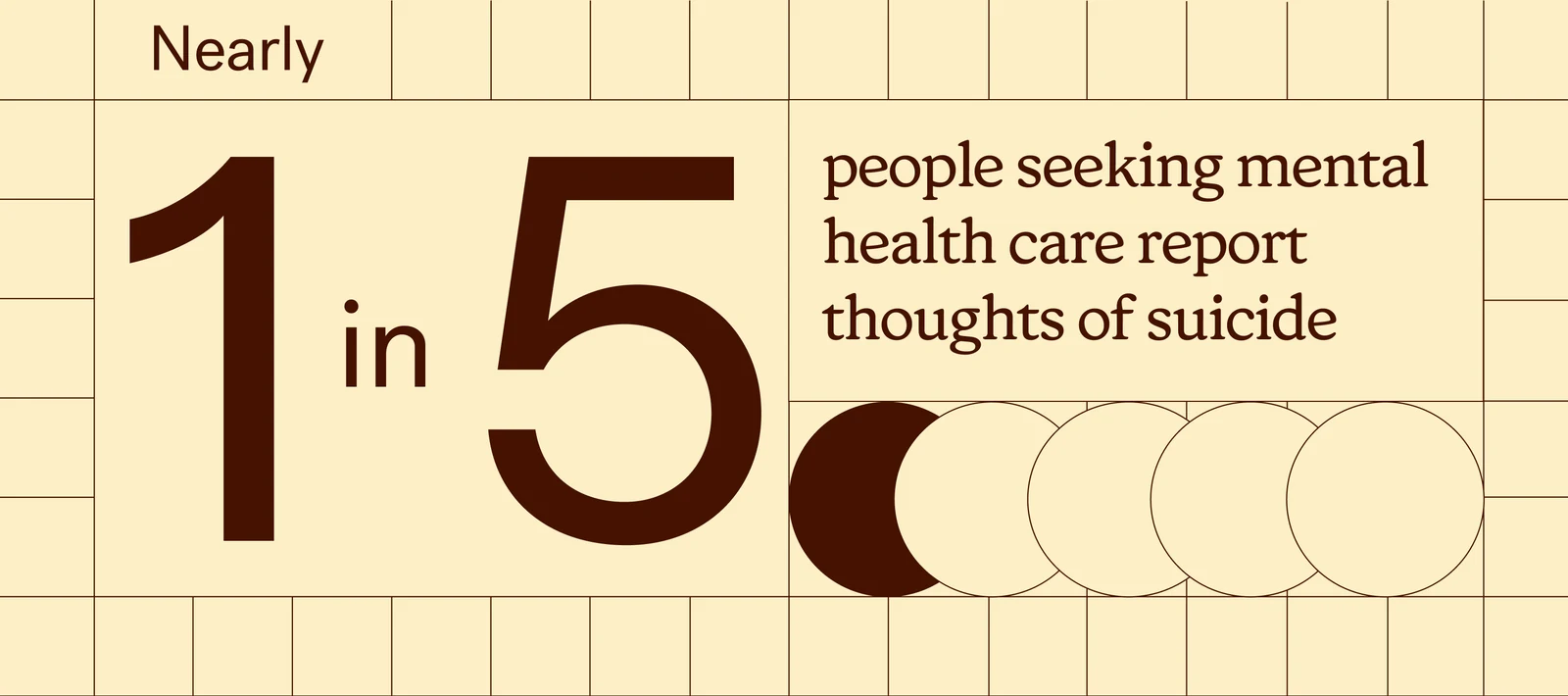
1. Nearly one in five patients presents with suicidal thoughts
Among 189,225 patients, 18.6% reported some level of suicidal ideation at their first visit, and 2.1% reported it nearly every day. For context, CDC surveillance finds that 5.3% of US adults had suicidal thoughts over a full year, and question 9 asks only about the last two weeks.
While it’s not surprising that patients seeking outpatient mental healthcare have higher rates of suicidal ideation than the general population, our study confirms the importance of screening and ensuring appropriate support as part of routine outpatient mental healthcare.
2. Adolescents report the highest rates of suicidal thinking
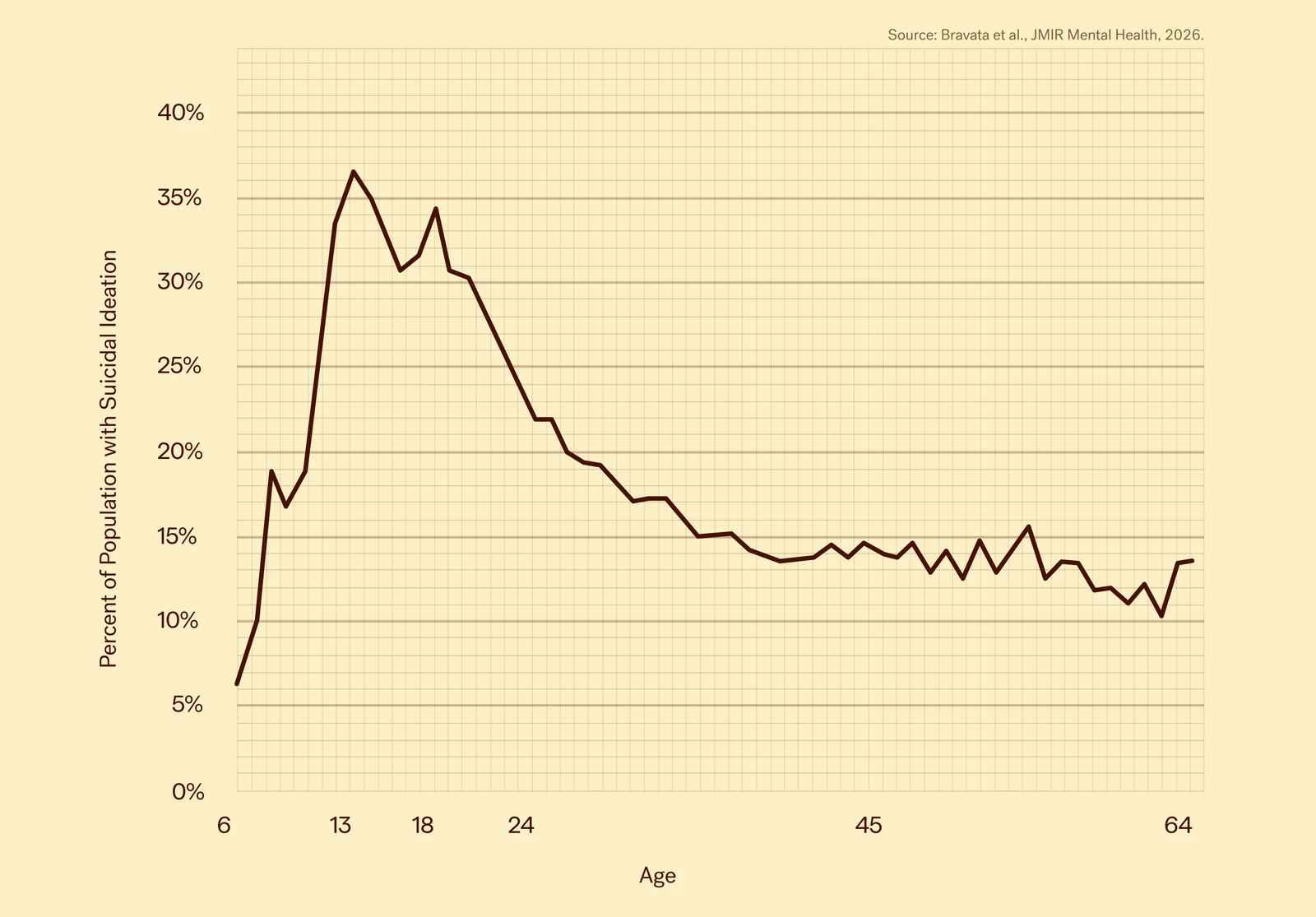
Importantly, we found that among patients aged 13 to 17 years, 32.8% reported suicidal ideation, and 4.8% reported it nearly every day. Published national estimates for this age group generally range from 13% to 22%, so what we observed is meaningfully higher, and the near-daily figure is the one I find most clinically concerning, since frequency of suicidal ideation increases the risk of acting on these thoughts.
Children aged 6 to 12 years also reported suicidal ideation at rates worth attention, though that finding requires a caveat I would not want a reader to miss: The PHQ-9 has not been validated for children under 12, and routine screening is not universally recommended at that age. I interpret our results in young children as a signal, but validated tools, such as the Ask Suicide-Screening Questions (ASQ) validated for children as young as 8 years old, are required to fully assess risk.
3. Girls have the highest rates of suicidality among young people, but the gender pattern reverses at age 19
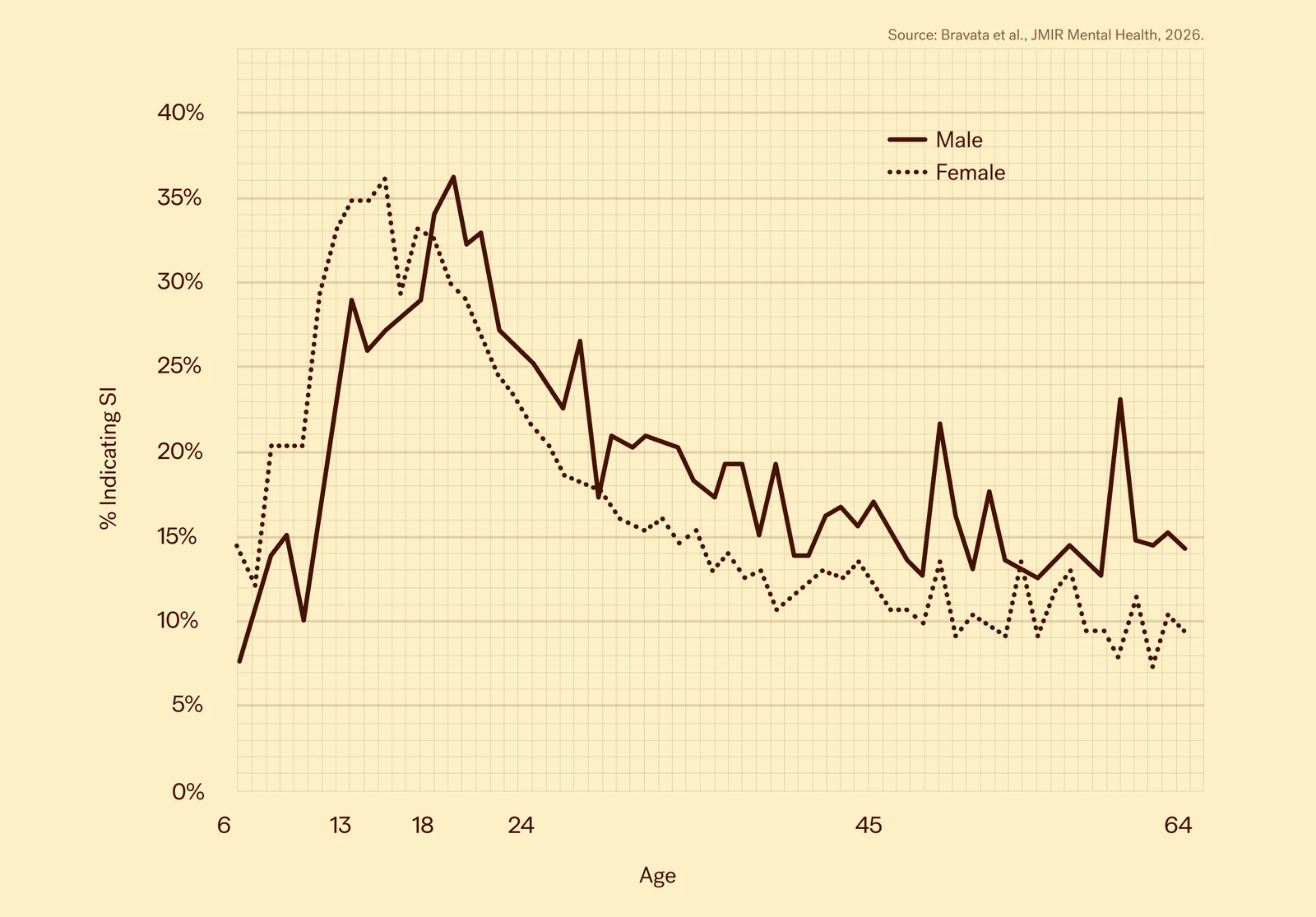
Girls up to 18 reported suicidal ideation more often than boys. But from 19 onward, men reported it more often than women.
Our study reflects what patients reported at a single visit and does not examine the underlying reasons for these differences by gender and age. That being said, our findings are concerning given that suicide remains a leading cause of death for adolescents and young adults.
Also consistent with existing literature, patients identifying as non-binary reported the highest rate of any group we examined, at 37.5%, compared with 21.6% of men and 18.8% of women.
4. Suicidal ideation tracked with social vulnerability
Patients living in the most socially vulnerable areas of the country reported both more suicidal ideation and more frequent ideation than those in the least vulnerable areas. The association was strongest for those with increased socioeconomic vulnerability and for what the CDC classifies as at-risk household characteristics, including single parenthood, disability, and limited English proficiency.
For me, this is a clear reason to incorporate routine screening for social determinants of health into clinical care. If housing instability and income insecurity are associated with the frequency of a patient’s suicidal thoughts, then screening for those conditions and connecting patients to resources belongs inside outpatient mental healthcare rather than alongside it.
5. The states with the highest rates have the fewest clinicians
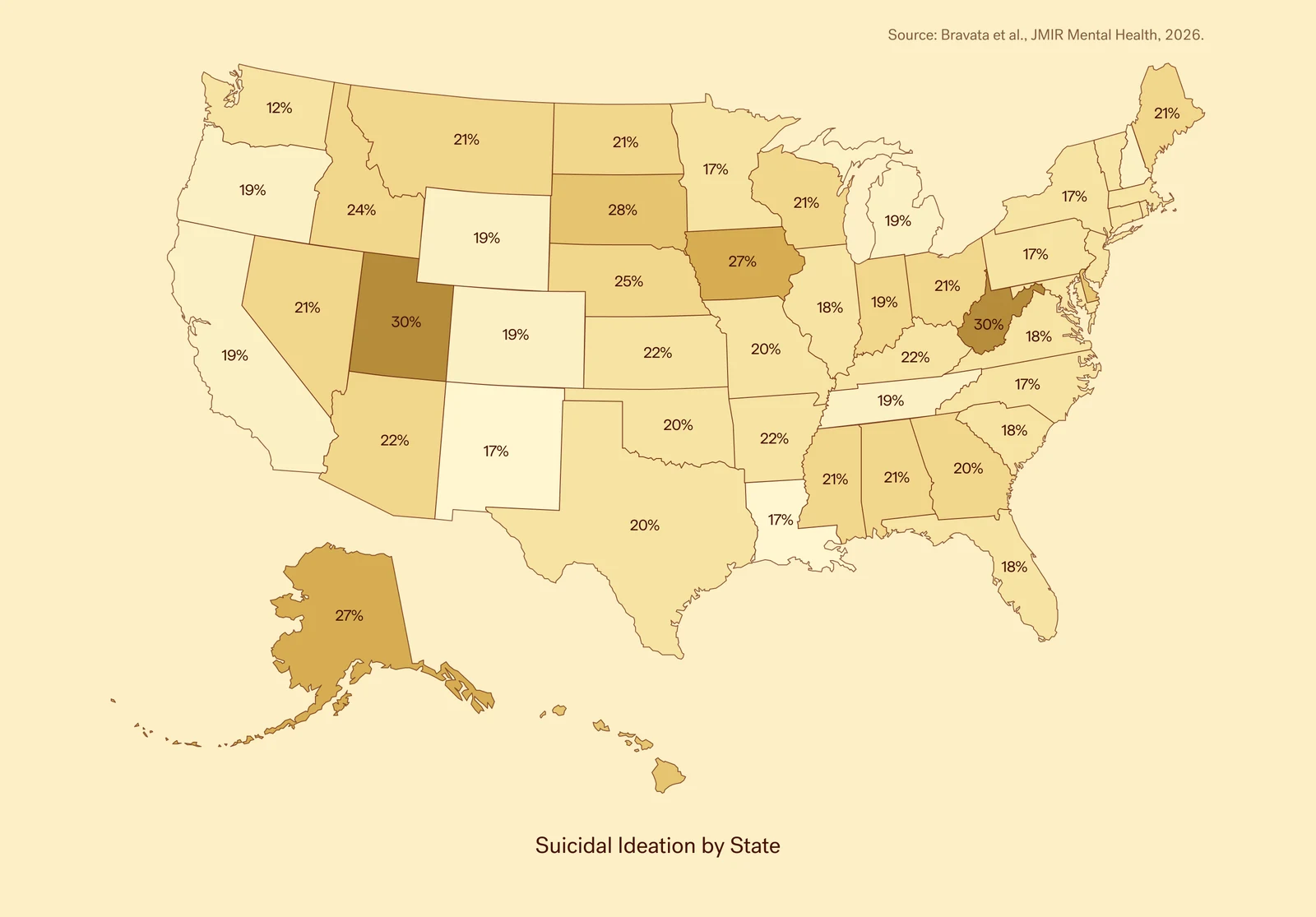
Rates of suicidal ideation varied considerably by geography, from 14.1% in Washington, DC to 30% in West Virginia. When we compared each state’s rate against its supply of mental health providers, West Virginia and Alaska stood out for having patients with high rates of suicidal ideation when they present to care alongside a documented mental health workforce shortage. Those two states face the largest gap between how much need their patients present with and how many clinicians are available to meet it.
What we do with findings like these
We look at data like this because a network of 85,000 clinicians can see patterns no single practice can. Headway’s biggest takeaways from this research include:
-
We built a safety response system that operates at scale. A positive response on question 9 notifies the treating clinician, the patient receives crisis resources, and patients have access to our crisis line staffed 24/7.
-
Screening at intake is warranted at every entry point, and any positive response should prompt a validated follow-up assessment. The validated Columbia-Suicide Severity Rating Scale (C-SSRS) is available on Headway for that step today.
-
We’re continuing to build a dense network across all 50 states, and findings like these show where the gaps remain. Rates of suicidal ideation are highest in the states with the fewest clinicians, including West Virginia and Alaska, and telehealth extends care where in-person options are limited.
Read the full paper
You can read the full paper, including the state-by-state figures and the care gap analysis, in JMIR Mental Health.
If you or someone you know is struggling or in a crisis, seek immediate support. The 988 Lifeline is a no-cost, confidential service available 24/7. Call or text 988, or visit 988lifeline.org.